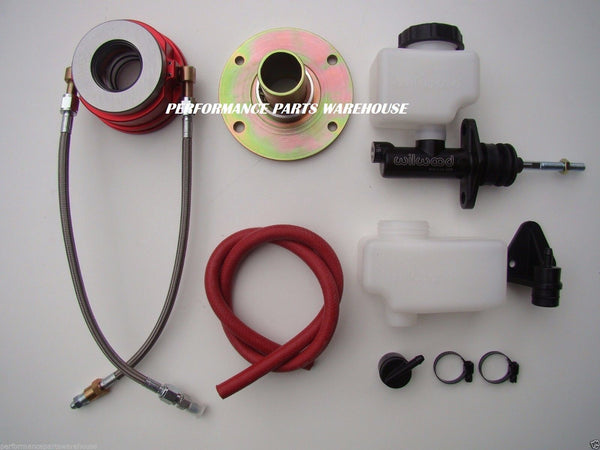
1400 Series Hydraulic Clutch Conversion
Pedal Effort 20% Less than Stock Mechanical or Cable Linkage.
Custom Installation Required
Application:
GM LS/LT Series Engines & SBC/BBC Equipped with;
2010-2015 CAMARO SS & Z28 TR6060
(Does not fit ZL1 TR6060)
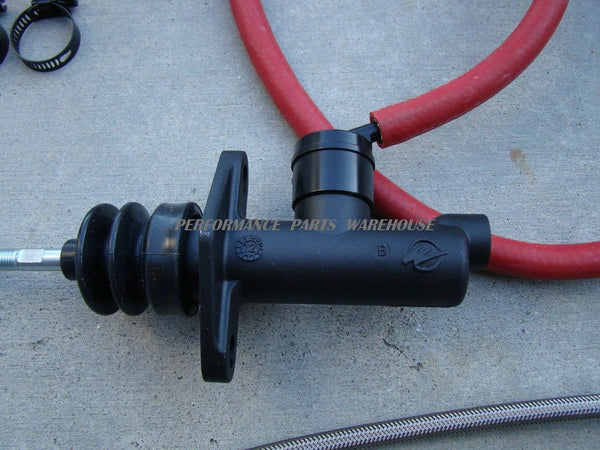
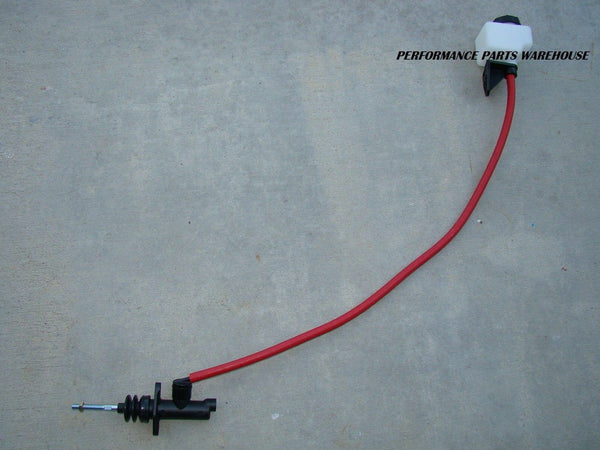
The "Push Style" Clutch Master Cylinder can be mounted on the firewall or frame rail depending on requirements.
6:1 Pedal Ratio Recommended
Kit includes: Clutch Master Cylinder & Slave Cylinder with (2) Steel Braided Lines; One feed line & One bleeder line (11" Length).
Kit is complete except for the main feed line which runs from the Master Cylinder to the Slave Cylinder feed line.
|
Use when a competitors clutch is too stiff; Hayes, Ram, Centerforce, Fidanza. Softens pedal effort by 20%.
Recommended for Transmission Swap into Different Vehicle than was Original.
Formula for Pedal Ratio:
Pedal ratio is the ratio of leverage your clutch pedal applies to the master cylinder. To determine the pedal ratio you need to measure the height of the pedal to the pivot point then divided the measurement of the pivot point to the lower arm that controls your rod to the master cylinder.
|
A = height of pedal
B = center to center measurement of the lower arm
C = pedal ratio
A divided by B equals C
Or example 9" divided by 1.5" equal 6 to 1 ratio.
|
|
If you apply 100 pounds of pressure to the clutch pedal, 100 pounds X (6 to 1) = 600 pounds of pressure. So, if the clutch pedal has been modified from its' original design the pedal ratio is effected drastically. You can now see the pedal ratio is a "multiplier" of the pressure you apply with your foot, because this is the leverage that is applied to the master cylinder.
Now, take this same formula and substitute 2" instead of 1.5" you end up with a 4.5 to 1 ratio. Multiply 4.5 times the 100 pounds of applied pressure and you get 450 pounds instead of 600 pound. That half inch cost you 25 percent of your clutching power. The same thing applies when you shorten the upper measurement.
|